10 Best Print-On-Demand Sites for Artists: 2026 Guide

Looking for the best possible way to sell your art online?
If you're an artist tired of the nitty-gritty of having to promote your work, manage inventory, or handle shipping logistics, print-on-demand (POD) platforms offer a hassle-free solution.
Whether you're looking for a built-in marketplace with instant exposure or a platform that lets you create a fully branded online store, the right POD site can help you monetize your creativity while focusing on your art.
Below, we’ve rounded up the 10 best print-on-demand platforms for artists to help you find the perfect fit for your business.
1. Fourthwall

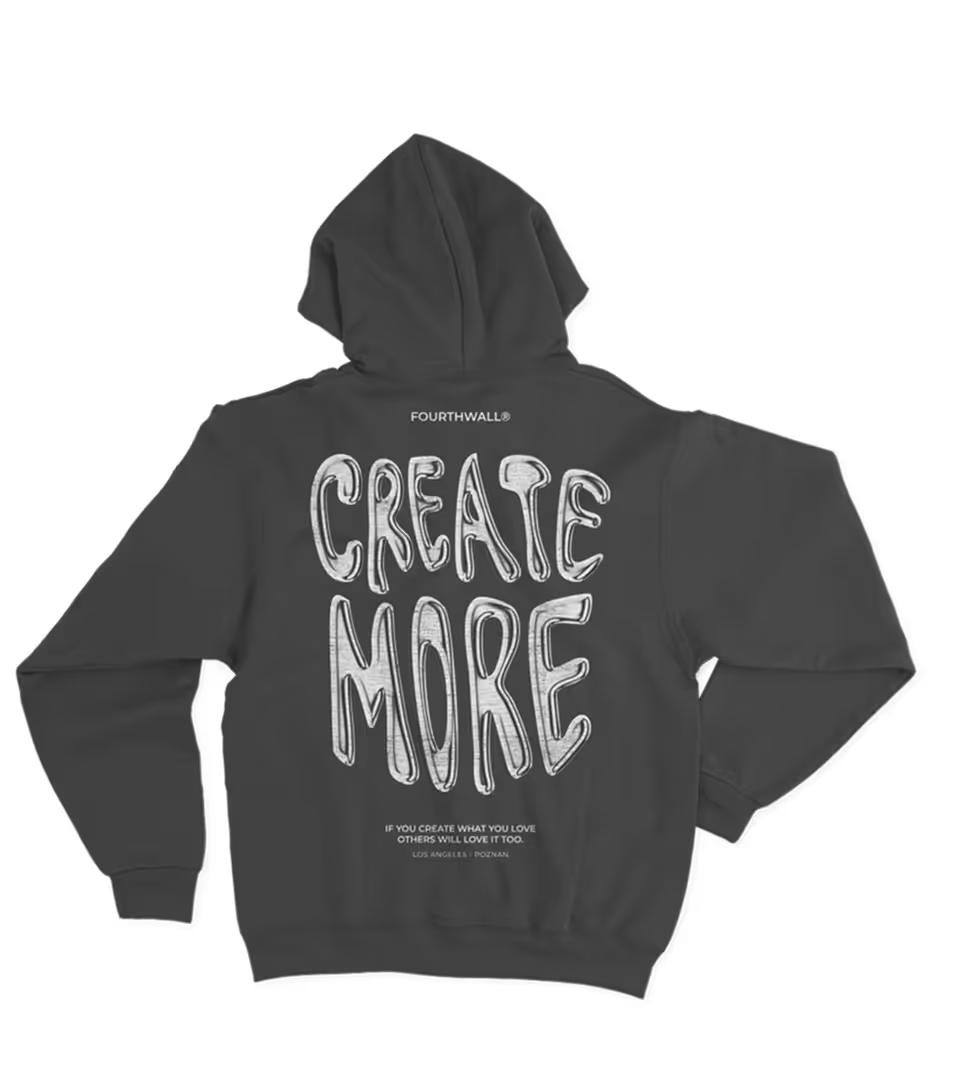
Fourthwall is an all-in-one creator commerce platform that lets artists launch a fully branded online store to sell print-on-demand merchandise and artwork without managing inventory or shipping.
It offers a large catalog of customizable products, including apparel, accessories, and wall art such as canvas prints, posters, and framed pieces, giving artists multiple ways to turn their designs into physical products.
Artists can also sell digital downloads directly through their storefront, making it easy to distribute artwork instantly to customers.
With built-in monetization tools and integrations with major social platforms, Fourthwall provides a flexible way for artists to manage their store and connect with their audience in one place.
Pros
- All-in-one platform with built-in storefront, fulfillment, analytics, and customer management
- Large catalog of 370+ customizable products, including apparel, accessories, and wall art
- No upfront inventory costs or setup fees for launching a store
- Worldwide fulfillment through partners like UPS and DHL
- Comprehensive design tools with a 3D mockup generator
- Direct integrations with Meta, YouTube, TikTok, and Twitch for social selling
- Built-in monetization tools like memberships and fan donations
- Marketing features such as email campaigns, promo codes, and sales analytics
Cons
- Customer support is mainly limited to email and help resources
- Some product categories have fewer options compared to specialized POD platforms
2. Fine Art America

Fine Art America focuses on high-quality art prints, framed artwork, canvas prints, and home décor, making it an ideal choice for photographers, illustrators, and painters.
The platform handles fulfillment, shipping, and customer service, allowing artists to focus on creating while reaching a global audience.
Artists can also take advantage of in-platform marketing tools, retail partnerships, and Shopify integration to expand their reach beyond the Fine Art America marketplace.
With custom pricing options, artists have control over their profit margins, making it a strong platform for those who prioritize selling premium prints.
Pros
- Wide range of premium print formats, including canvas, framed, acrylic, and metal prints
- Partnerships with major art retailers that increase exposure for artists
- Artists can set their own prices and control profit margins
- Built-in marketplace with strong organic traffic and marketing tools
- Integration options with Shopify or external websites
Cons
- Free accounts are limited to 25 uploaded designs
- Takes a notable commission on sales
- Interface can be more complex than other POD platforms
- Limited fulfillment locations can lead to slower international shipping
3. Printful

Printful is a print-on-demand service that allows artists and entrepreneurs to create and sell custom products without managing inventory or shipping.
The platform offers a wide selection of customizable items, such as apparel, accessories, home décor, and wall art, while automatically handling production and order fulfillment.
It also integrates with many popular eCommerce platforms, making it easy to connect a store and start selling products online.
With fulfillment centers located around the world, Printful helps businesses deliver orders to customers across multiple regions.
Pros
- Large catalog of customizable products, including apparel and wall art
- Integrates with major eCommerce platforms like Shopify, Etsy, and WooCommerce
- No upfront inventory costs; pay only when a sale is made
- Global fulfillment network for international shipping
- Built-in mockup generator for previewing designs
Cons
- Requires a separate storefront to sell products
- Premium materials and printing options can be more expensive
- Customer support is mainly offered through email and live chat
- Refunds are limited to damaged or lost orders
4. Printify

Printify is a print-on-demand platform that connects artists and entrepreneurs with a global network of print providers to manufacture and ship custom products.
The platform offers a large catalog of customizable items, including apparel, accessories, home décor, and wall art, giving sellers a wide range of products to design and sell.
Printify integrates with popular eCommerce platforms and marketplaces, allowing artists to connect their store and automate order fulfillment.
Because production is handled by different print partners, sellers can choose providers based on pricing, location, and product availability.
Pros
- Large product catalog with over 1,300 customizable items
- Lower base costs
- Network of global print providers to choose from
- Integrates with Shopify, Etsy, Amazon, and TikTok Shop
- Free plan with unlimited designs and multiple stores
Cons
- Product quality can vary between print providers
- Shipping times depend on the selected fulfillment partner
- Limited control over packaging and branding
- Shipping rates and delivery times are not standardized
5. Redbubble

Redbubble is a print-on-demand marketplace where independent artists can upload their designs and sell them across a wide range of products without handling production, inventory, or shipping.
Once your artwork is uploaded, the platform automatically formats it for different items (apparel, stickers, wall art, phone cases, and home décor), making it easy to turn any design into multiple products.
Redbubble also manages order processing, manufacturing, and worldwide fulfillment through its network of production partners. And because it operates as a marketplace with an established customer base, artists can reach buyers already browsing the site for original artwork and unique designs.
Pros
- Large product catalog including apparel, stickers, phone cases, and home décor
- Artists can adjust product markups to control earnings
- Simple upload process for applying designs to multiple products
- Marketplace with built-in traffic from existing shoppers
- Global fulfillment handled by production partners
Cons
- Highly competitive marketplace with many artists
- Shipping times can vary, especially internationally
- Redbubble takes a notable share of each sale
- Does not integrate with external eCommerce stores like Shopify or Etsy
6. Zazzle

Zazzle is another popular print-on-demand marketplace specializing in customizable products, allowing artists to turn their designs into items customers can personalize before purchasing.
Creators can upload artwork and apply it to a wide range of products, like stationery, invitations, home décor, and office supplies, making the platform especially popular for gifts, events, and branded merchandise.
Many products are built around editable templates, which enable buyers to add their own names, text, or images while still showcasing the artist’s original design.
Zazzle also manages manufacturing, payment processing, shipping, and customer support, while artists earn royalties from each sale and can adjust their royalty rate to influence pricing and potential earnings.
Pros
- Large product catalog including apparel, stationery, invitations, and home goods
- Built-in design tools for creating customizable product templates
- Artists can set their own royalty rates
- Marketplace exposure with built-in promotional tools
- Production, shipping, and customer service are handled by the platform
Cons
- No integrations with external eCommerce platforms like Shopify or Etsy
- Limited control over print quality and packaging
- Competitive marketplace with many sellers
- Promotions and affiliate fees can reduce overall earnings
7. Society6

As an artist-focused print-on-demand marketplace, Society6 allows creators to sell their designs on a wide range of high-quality products, from framed prints and wall art to furniture and tech accessories.
The platform manages all aspects of production, fulfillment, and shipping, allowing artists to focus solely on their designs.
Society6 also provides artists with global exposure through its built-in marketplace and vibrant art community, offering opportunities to connect with customers, collaborate with other artists, and participate in wholesale and trade programs.
While the platform has transparent pricing and set profit margins, artists can earn more by adjusting art print prices, giving them some flexibility in their revenue strategy.
Pros
- Built-in artist community with promotional opportunities and exposure
- Premium materials that produce vibrant, long-lasting prints
- Society6 handles printing, shipping, and customer support
- Marketplace audience provides built-in traffic for artists
Cons
- Fixed 10% royalty on most products limits earning potential
- No integrations with external eCommerce platforms
- Limited control over storefront branding and design
- Basic analytics with limited customer insight
8. Gelato

Gelato offers a sustainable print-on-demand solution for artists who want to share their work while minimizing their environmental impact.
With a global network of 140+ print partners across 32 countries, Gelato prints orders closer to the delivery location, reducing carbon emissions, shipping costs, and delivery times.
The platform offers a diverse range of products, including apparel, drinkware, accessories, calendars, and premium wall art such as canvas prints and posters.
Artists can seamlessly integrate Gelato with major eCommerce platforms or use its API for custom integrations, making it an ideal choice for those who want flexibility in managing their storefront.
Pros
- Local production network that reduces shipping costs and environmental impact
- 140+ production locations in 32 countries for faster global delivery
- Integrates with platforms like Shopify, Etsy, WooCommerce, and Amazon
- No upfront inventory or startup costs required
- 24/7 support and educational resources through Gelato Academy
Cons
- Fewer advanced printing options than some competitors
- Print quality may vary depending on the fulfillment partner
- Some tools require a paid subscription
- No phone support; customer service limited to email and live chat
9. CafePress

CafePress is one of the earliest print-on-demand marketplaces, allowing artists to upload designs and sell them across a variety of customizable products.
Creators can apply their artwork to items such as apparel, drinkware, home décor, and accessories while the platform manages manufacturing, order fulfillment, and shipping.
CafePress also offers a licensed fan portal program that allows approved sellers to create merchandise featuring officially licensed pop culture properties.
While the platform has evolved over time, it still provides a straightforward way for artists to sell designs without managing production or logistics.
Pros
- Wide selection of customizable products
- Licensed fan portal for selling merchandise tied to popular franchises
- Platform handles production, fulfillment, and shipping
- Free to list products with optional premium shop upgrades
Cons
- Lower marketplace traffic compared to newer platforms
- Interface and design tools feel dated
- Limited control over storefront customization
- Advanced features require a paid subscription
10. Amazon Merch on Demand

Amazon Merch on Demand is a print-on-demand program that allows artists to sell custom designs directly through Amazon’s marketplace.
Creators upload their artwork on products such as t-shirts, hoodies, and accessories, while Amazon handles production, order fulfillment, shipping, and customer service.
Products are listed on Amazon alongside other retail items, giving sellers access to a large global audience of shoppers.
However, joining requires approval through an application process, and branding options are more limited than on independent storefront platforms.
Pros
- Access to Amazon’s large global customer base
- Amazon manages printing, fulfillment, and customer support
- Products qualify for fast Prime shipping
- No upfront costs; artists earn royalties per sale
Cons
- Requires application and approval to join
- Catalog is mainly limited to apparel and accessories
- Limited branding and storefront customization
How Artists Can Make Money with Print-On-Demand
Print-on-demand platforms offer artists a low-risk way to monetize their creativity by selling custom-designed products without handling inventory.
By simply uploading their artwork to platforms like Fourthwall and Printify, artists can reach a global audience while earning passive income from every sale.
With flexible pricing, no upfront costs, and effortless scalability, POD offers a powerful opportunity for artists to turn their passion into profit.
Here's how print-on-demand can help you build a successful and sustainable income stream:
- Earn Royalties on Every Sale: Artists receive a percentage of each sale after production costs, enabling them to generate passive income without managing inventory. Since the platform handles printing and shipping, artists can focus on creating new designs instead of dealing with logistics.
- Set Custom Pricing and Profit Margins: Platforms like Printful and Printify let artists control their prices, ensuring they earn at the profit levels they set. This flexibility allows artists to experiment with pricing strategies, seasonal promotions, or exclusive collections to maximize earnings.
- No Upfront Inventory Costs: Since products are only printed when ordered, artists avoid the risk of unsold stock and large upfront investments. This makes POD a cost-effective way to start a business without financial barriers, allowing creators to test new designs without financial risk.
- Scale with Demand: As an artist’s audience grows, they can expand their product offerings without worrying about production or storage limitations. Whether they sell a few items a month or scale to thousands of sales, the POD model adapts seamlessly, making it an ideal solution for long-term growth.
- Diversify Income Streams: POD allows artists to sell a variety of products, from apparel to home décor, maximizing earning potential with minimal overhead. This diversification ensures that artists can cater to diverse customer preferences, expanding their reach and generating multiple revenue streams.
How to Choose the Right Print-On-Demand Platform for Your Art
About the Author

Design & sell custom products
Build your brand. On your terms
Browse our product catalog











Frequently asked questions
There are no monthly fees, no upfront costs, and no contracts to use Fourthwall. You set your prices and choose your own margins. Here is how our pricing and splits work when you sell:
- Products from our product catalog. All products in our product catalog have a publicly listed flat fee, which gets deducted from the selling price you set. There are no extra percentages/margins. You keep 100% of profits.
- Products you ship yourself. No fee (0% fee)
- Digital products. 5% flat fee (or 0% with Fourthwall Pro)
- Subscription memberships. 5% flat fee
Additionally, all US-based credit card transactions have an added 2.9% + $0.30 payment processing fee (same as Shopify). Fees vary for PayPal and other providers. Learn more.
Product costs are listed directly in our product catalog.
If a t-shirt is listed in our catalog at a $10 cost, we will automatically deduct that amount from your profits whenever you make a sale. You can sell products for any price you want.
For example, if you sell the shirt for $22, you'll make $12 in profit on each unit sold. If you sell it for $50, then you'll make $40 in profit on each unit sold.
Yes! Fourthwall works with manufacturing & fulfillment partners around the globe in the US, UK, EU, Canada, Mexico, Australia, and Japan.
Shipping rates are dynamically determined by the size of package and destination. We work with most major carriers and pass through the true cost of shipping. That means that you can offer low-cost, fast shipping to your fans. Most items have a delivery window of 5-8 days.
Be sure to browse our product catalog to find products that are fulfilled out of your target regions to provide the fastest & cheapest shipping for your community.
Yes! Fourthwall operates as the "Merchant of Record" and automatically supports the following payment methods on checkout:
- All major credit cards
- PayPal
- Apple Pay & Google Pay
- Amazon Pay
- And many local payment methods. Click here to see the full list
Fourthwall operates as the "Merchant of Record", which means that we're responsible for handling all sales taxes. This includes nexus registration, collecting sales tax, and remitting this to US states & other countries.
That way you can focus on designing products and promoting your shop, not taxes.
Yes. You can connect a custom domain or subdomain on Fourthwall. Learn More.
Fourthwall Pro subscribers receive a free custom domain upon upgrading.
If you need help finding an artist or designer, check out our design community.
This is a vetted network of exceptional designers that can help you make great quality designs for your audience. We also recommend tools like Canva or Kittl.
Yes. For any product from our product catalog, we'll handle all customer support for you.
From answering general order questions to making address changes, our team is there to ensure that your buyers are treated with the same level of care that you would personally give them. We have a 12-hour or less average reply time, including nights and weekends.
For any items that you source on your own and ship from home, however, you'll need to do customer support.
Yes! Over 200,000 sellers use Fourthwall to power their storefronts. This includes creators, podcasters, artists, musicians, startups, non-profits, and more.
Get inspired and browse all examples sites.
Fourthwall supports many free integrations, including:
- YouTube Product Shelf (Merch Shelf)
- TikTok Shop
- Facebook and Instagram Shopping
- Twitch Product Gifting
- StreamElements and Streamlabs stream alerts
- Zapier
- Klaviyo
- Mailchimp
- And many, many more
There are no requirements to join Fourthwall! Sign up now.