13 Best Printify Alternatives for Print-on-Demand in 2026

Printify has become a familiar name in the print-on-demand industry, widely used by online sellers who are looking to create and sell custom products without managing inventory.
However, it isn’t the only platform available, and depending on your business model or product needs, it may not be the best fit for every seller.
In this guide, we’ll explore some of the best Printify alternatives to help you find a print-on-demand platform that aligns more closely with your goals.
What Is Printify?

Founded in 2015, Printify is a print-on-demand platform that connects online sellers with a global network of third-party manufacturers who produce and ship custom products after a purchase is made.
Rather than operating its own production facilities, the platform functions as a supplier marketplace where users can choose different print providers based on pricing, location, and performance ratings. Key features of Printify include:
- Large Product Catalog: Offers a catalog of more than 1,300 customizable items across apparel, accessories, home goods, pet products, and other categories.
- Network of Print Providers: Sellers can choose from over 140 manufacturing partners worldwide, allowing them to compare production costs, shipping speeds, and provider ratings.
- Design Editor and AI Tools: The platform includes a built-in product editor for placing artwork on items, along with AI image generation tools that can create artwork from text prompts.
- Global Fulfillment Network: Print providers operate across multiple regions, allowing sellers to select manufacturers closer to their target markets to potentially reduce shipping times.
- eCommerce Integrations: Printify integrates with major ecommerce platforms and marketplaces, including Shopify, Etsy, Amazon, eBay, WooCommerce, Wix, Squarespace, BigCommerce, and TikTok Shop.
- Pop-Up Store: Users who don’t have an external ecommerce store can create a simple product page using Printify’s Pop-Up Store feature and share a checkout link directly with customers.
- Printful-Printify Merger: This merger connects Printify's marketplace of print partners with Printful's in-house manufacturing infrastructure, expanding the production network available to sellers.
Why You Might Want a Printify Alternative
Printify offers a flexible print-on-demand model, but it may not meet every seller’s operational or branding needs.
Depending on how quickly your store is growing, how much control you want over presentation, or how involved you want to be in managing fulfillment, these factors can become more noticeable.
- Inconsistent Product Quality: Because Printify works with a network of independent print providers rather than manufacturing its own products, quality can vary across suppliers. A product from one partner may meet expectations while another may show slight alignment or print differences, which is why many sellers order samples before listing products.
- Support Response Times: The platform provides chat and email support, but response times can fluctuate depending on demand. During peak shopping periods, some users report longer wait times for issue resolution.
- Limited Branding Customization: Certain branding features, such as custom packaging or product inserts, are available only with higher-tier plans. Sellers who want more control over packaging presentation may need to evaluate whether these options meet their branding needs.
- Operational Complexity at Scale: Managing multiple print providers, product variants, and fulfillment settings can add complexity as a store grows. Sellers running several storefronts or larger product catalogs may need additional time to manage provider selection and order routing.
Printify Alternatives at a Glance
| Platform | Best For | Standout Features | Starting Pricing |
|---|---|---|---|
| Fourthwall | Creators building a branded merch store | All-in-one storefront + POD, digital products & memberships, creator platform integrations | Free plan ($0/mo) Pro $19/month |
| Printful | Sellers who want high-quality, in-house POD production | In-house manufacturing, advanced branding (labels, pack-ins), 430+ products | Free plan Growth $24.99/month |
| Sellfy | Creators selling digital products and simple merch | Built-in email marketing, subscriptions, and embeddable buy buttons | $22/month |
| Spreadshirt | Designers who want marketplace exposure | Built-in global marketplace, Spreadshop storefront, and YouTube Merch Shelf integration | Free |
| Gelato | Global sellers needing faster international shipping | Local production in 32+ countries, sustainability focus, pricing tools | Free plan Gelato+ $25/month |
| Gooten | Growing eCommerce brands needing automated fulfillment | Intelligent order routing, strong backend infrastructure, scalable automation | Free |
| Teelaunch | Shopify stores wanting simple POD fulfillment | District Photo manufacturing, built-in profit calculator | Free |
| Zazzle | Designers selling personalized gifts and event products | Massive marketplace, customer design customization tools, 1,000+ products | Free royalty-based earnings |
| Apliiq | Fashion brands building private-label apparel | Woven labels, embroidery patches, streetwear-focused catalog | Free |
| CustomCat | High-volume stores needing fast U.S. fulfillment | 500+ products, DIGISOFT™ printing, bulk discounts | Free plan Pro $30/month |
| JetPrint | Sellers exploring niche POD products | 650+ products, including shoes, watches, and sports gear | Free |
| Spring | Content creators selling merch through social media | Integrations with YouTube, TikTok, Twitch, and Instagram | Free |
| Redbubble | Artists wanting passive marketplace sales | Built-in audience, hands-off fulfillment, 70+ product types | Free royalty-based model |
Top 13 Printify Alternatives for Your POD Needs
1. Fourthwall

Fourthwall is an eCommerce platform designed for creators who want to run a branded online store without managing production or logistics themselves.
The platform combines storefront tools with print-on-demand fulfillment, allowing sellers to design and sell merchandise while production, packaging, and shipping are handled through fulfillment partners.
The product catalog includes over 370 customizable items, including apparel, accessories, and home goods. Designs can be applied using several printing methods, such as direct-to-garment (DTG), embroidery, screen printing, direct-to-film (DTF), and sublimation, depending on the product and supplier.
Fourthwall also supports additional revenue streams beyond physical merchandise. Creators can sell digital downloads, memberships, and other content directly through their storefront, while built-in tools help manage payments, customer orders, and store analytics.
Pricing
Free Plan: $0/month
- No platform fee on physical products
- 5% fee on digital products and memberships
- Website builder with fully-customizable design tools
- Sell digital products, memberships, and physical merch
- Accept donations/tips
- Upload video content behind a secure paywall
- Email marketing and social media tools
- Create promo codes and giveaway links
- Handles sales tax, fulfillment, and shipping for you
Pro Plan: $19/month or $180/year
Everything in the Free Plan, plus:
- 0% digital product fees
- Free .store domain
- $10 monthly sample credit
- Advanced analytics
- Unlimited team members
- Priority support
Pros
- Branded storefront with control over design and layout
- Supports multiple printing methods, including DTG, embroidery, screen printing, DTF, and sublimation
- Product catalog with apparel, accessories, and other customizable items
- Ability to sell merchandise, digital products, memberships, and accept tips in one place
- Integrations with platforms such as TikTok Shop, YouTube Merch Shelf, Spotify, and Twitch
- Global fulfillment across several major regions, including the US, UK, EU, and AUS
Cons
- No built-in marketplace for product discovery
- May be less suited for bulk wholesale or B2B apparel production
- Limited support for certain niche printing methods, such as engraving or embossing
2. Printful

Printful is a print-on-demand and fulfillment platform that manufactures and ships custom products for online sellers.
The company operates its own production facilities, which allows it to oversee manufacturing processes and maintain consistent production standards.
Its catalog includes more than 430 customizable products across categories such as apparel, accessories, and home goods, with printing methods that include direct-to-garment (DTG), embroidery, sublimation, direct-to-film (DTF), and cut-and-sew production.
Printful also includes design tools, branding options like inside labels and pack-ins, and integrations with major eCommerce platforms to automate order fulfillment.
Pricing
Free Plan: $0/month
- Access to the full product catalog
- Unlimited product designs and stores
- Mockup generator and design tools
- Integration with ecommerce platforms
- 24/7 chat and email support
Growth Plan: $24.99/month
Everything in the Free Plan, plus:
- Product discounts of up to 33%
- Reduced pricing on branding options
- Discounted product samples
- Access to custom packaging features
Enterprise Plan: Custom pricing
- Dedicated account support
- Warehousing and fulfillment services
- Advanced analytics and reporting tools
Pros
- In-house production facilities help maintain consistent product quality
- Catalog of 430+ customizable products
- Multiple printing methods, including DTG, embroidery, sublimation, and DTF
- Branding options such as custom labels, pack-ins, and white-label shipping
- Advanced mockup generator and design tools
- Integrates with major ecommerce platforms
Cons
- Base product pricing can be higher without paid plan discounts
- No built-in storefront or marketplace
- Does not support digital product or membership sales natively
- Customer support limited to chat and email channels
3. Sellfy

Sellfy is an eCommerce platform that allows creators to sell digital products, subscriptions, and physical merchandise from a single online storefront.
Products can be sold through a hosted storefront or embedded directly into existing websites, blogs, or social media pages using Buy buttons and product widgets.
In addition to digital products, Sellfy also offers a smaller print-on-demand catalog that lets users sell customized merchandise without having to manage inventory.
Pricing
Starter: $22/month
- Up to $10K in annual sales
- Unlimited products
- Built-in email marketing tools
Business: $59/month
- Up to $50K in annual sales
- Upselling tools
- Affiliate marketing features
- Cart abandonment recovery
- Removal of Sellfy branding
Premium: $119/month
- Up to $200K in annual sales
- Advanced store customization
- Priority support
Pros
- Beginner-friendly platform for selling digital products and subscriptions
- Built-in email marketing, discount tools, and upsells
- Embeddable Buy buttons and product widgets for existing websites
- No inventory management required for print-on-demand products
Cons
- Smaller print-on-demand product catalog compared to many POD platforms
- Monthly subscription required regardless of sales volume
- Limited storefront design customization compared to some ecommerce builders
4. Spreadshirt

Spreadshirt is a print-on-demand platform that allows users to upload designs and sell them on customizable products without managing production or shipping.
The platform operates as both a print provider and an online marketplace where creators can list their designs for sale.
Its catalog includes over 250 customizable items across categories such as apparel, accessories, and drinkware, with products produced in facilities located in the United States and Europe.
In addition to marketplace listings, users can create a standalone storefront, Spreadshop, to sell products under their own brand.
Pricing
Free to Use: $0/month
- No setup or subscription fees
- Earn royalties from marketplace sales
- Set your own margins when selling through a Spreadshop
Pros
- Built-in marketplace with existing customer traffic
- Free storefront option through Spreadshop
- Automated production and fulfillment in the U.S. and EU
- Offers organic and eco-friendly apparel options
- Integration with YouTube Merch Shelf
Cons
- Profit margins can be lower than platforms with fully customizable pricing
- Limited storefront branding and customization options
- Customer data from marketplace purchases is not fully accessible to sellers
- Smaller product catalog compared to some larger POD providers
5. Gelato

Gelato is a global print-on-demand platform that connects online sellers with a network of more than 140 production partners across 32 countries.
Orders are automatically routed to the printing facility closest to the customer, enabling local production and faster delivery in many regions.
It offers a catalog of roughly 250+ customizable products across categories such as apparel, wall art, stationery, drinkware, and home goods.
Products can be printed using techniques such as direct-to-garment (DTG), embroidery, dye-sublimation, and other digital printing methods, while built-in design tools and integrations with eCommerce platforms help sellers create products and automate order fulfillment.
Pricing
Free Plan: $0/month
- Access to a global fulfillment network
- Core eCommerce integrations
- Basic design and mockup tools
Gelato+: $25/month or $249/year
- Up to 20% discounts on products
- Premium mockups
- Branded labels
- Expanded design assets
Gold: $129/month or $1,285/year
- Up to 25% product discounts
- Additional branding discounts
- Advanced pricing tools
Platinum: Custom pricing
- Dedicated onboarding
- Enterprise-level support
Pros
- Local production network spanning multiple countries
- Faster shipping in many international markets
- Consistent print standards across partner facilities
- Product personalization tools available
- Pricing tools to help estimate margins
Cons
- Product catalog is smaller than some large POD marketplaces
- Some advanced features require paid plans
- Customer support is primarily handled through email
- Limited options for niche or novelty product categories
6. Gooten

As a print-on-demand fulfillment platform, Gooten connects eCommerce businesses with a global network of manufacturing partners.
Rather than requiring sellers to manually select individual print providers, the platform automatically routes orders to production partners based on factors such as location, capacity, and delivery efficiency.
This approach is designed to streamline order fulfillment and reduce the need for sellers to manage supplier relationships directly.
Gooten also integrates with major eCommerce platforms, so orders can be automatically sent to production partners once a purchase is made, allowing sellers to focus on managing their storefront and customer experience while fulfillment is handled in the background.
Pricing
Free to Use: $0/month
- No platform subscription fees
- Pay per product and shipping costs
VIM (Very Important Merchant) Program
- Volume-based discount tiers
- Silver, Gold, and Platinum levels based on sales volume
Pros
- No monthly platform fees
- Automated order routing across production partners
- Strong integrations with eCommerce platforms
- Designed to handle growing order volumes
- Competitive margins on common product categories
Cons
- Limited tools for creators selling directly to fans
- Dashboard can require time to learn for new users
- Basic branding customization options
- Mockup generation tools are relatively simple
7. Teelaunch

Teelaunch is a print-on-demand fulfillment platform that integrates directly with eCommerce stores to produce and ship custom products after an order is placed.
The service works with manufacturing partners such as District Photo to handle production and logistics for apparel and other customizable items.
Its catalog includes products like t-shirts, drinkware, home goods, and gift-oriented merchandise, and provides tools to help you calculate pricing before listing items on your store.
Pricing
Free to Use: $0/month
- No subscription fees
- Pay only for the product and shipping costs
- Storefront platform fees may apply, depending on the ecommerce platform used
Pros
- Apparel production supported by District Photo
- No monthly subscription costs
- Built-in profit calculation tools for pricing products
- Branded packing slips available
- Integrates with eCommerce platforms such as Shopify, Etsy, and WooCommerce
Cons
- Fewer integrations beyond major eCommerce platforms
- Limited white-label branding options compared with some POD providers
- International shipping speeds may vary depending on the destination
8. Zazzle

Zazzle is a print-on-demand marketplace that allows creators to upload designs and sell them on customizable products without managing production or fulfillment.
The platform focuses heavily on product personalization, enabling customers to modify designs directly through an online editor before placing an order.
Its catalog includes more than 1,000 customizable products, spanning apparel, home décor, stationery, accessories, and gift-oriented items commonly used for events such as weddings, birthdays, and corporate occasions.
And because Zazzle operates as a marketplace with an established user base, creators can list products and earn royalties from sales while the platform handles manufacturing, shipping, and customer service.
Pricing
Free to Use: $0/month
- No setup or subscription fees
- Creators earn a minimum 5% royalty per sale
Zazzle Plus: $9.95/year
- Buyer-focused subscription
- Free shipping on select items
Zazzle Premium Plus: $49.95/year
- Unlimited premium shipping on qualifying products
Pros
- Built-in marketplace with a large global customer base
- Strong product personalization tools with real-time editing
- Catalog of 1,000+ customizable products
- Fulfillment, shipping, and customer service are handled by the platform
- Well-suited for event-driven and gift-oriented products
Cons
- Limited branding control and storefront customization
- Competitive marketplace with many sellers
- Royalty-based earnings can result in lower profit margins
- Promotions and discounts may affect royalty payouts
9. Apliiq

Apliiq focuses primarily on custom apparel and private-label clothing production.
The service specializes in branded garment customization, offering features such as woven neck labels, embroidered patches, custom tags, and other apparel-focused branding options.
Its catalog centers on streetwear-style products, including hoodies, joggers, flannels, hats, and premium t-shirts designed for clothing brands rather than general merchandise.
Production is handled in Los Angeles, allowing the company to oversee manufacturing and support brands seeking greater control over apparel presentation.
Pricing
Free to Use: $0/month
- No platform subscription fees
- Pay per product and fulfillment costs
- Base garments typically range from about $7–$30 depending on the item
Pros
- Strong private-label branding options, such as woven labels and embroidery
- Apparel catalog focused on streetwear and fashion-oriented products
- U.S.-based production for quality oversight
- Sample pricing available for product testing
- Bulk discounts and optional warehousing for growing brands
- Integrates with platforms such as Shopify, WooCommerce, and Etsy
Cons
- Base product costs can be higher than some budget POD platforms
- Additional branding features can increase fulfillment times
- Smaller product catalog compared to larger POD providers
- Limited marketplace integrations
- Setup may require more planning for first-time sellers
10. CustomCat

CustomCat is a U.S.-based print-on-demand fulfillment platform that produces and ships custom merchandise for online sellers.
Unlike supplier marketplace models, the company operates its own production infrastructure, allowing orders to be processed through a centralized manufacturing system.
The platform offers a catalog of 500+ customizable products, with a strong focus on apparel from established brands such as Bella+Canvas, Gildan, Hanes, Port Authority, and Adidas.
CustomCat also prints its products using methods such as DIGISOFT™ digital printing, embroidery, and dye sublimation, and integrates with eCommerce platforms to automatically route orders for production and shipping.
Pricing
Lite Plan: $0/month
- Access to full product catalog
- DIGISOFT™, embroidery, and dye sublimation printing options
- Community support
Pro Plan: $30/month ($25/month billed annually)
- 20–40% discounts on base product pricing
- Priority order processing
- Early access to new products
Enterprise Plan: Custom pricing
- 30–50% product discounts
- Dedicated account representative
- Custom API access and bulk order tools
Pros
- Fast U.S. fulfillment, often shipping within 1–3 business days
- Catalog of 500+ customizable products
- Access to well-known apparel brands
- Multiple professional printing methods available
- Bulk tools, CSV uploads, and API access for scaling stores
- Phone and email support available
Cons
- Limited branding options, such as custom packaging or labels
- Basic design and mockup tools
- No built-in storefront or marketplace
- International shipping may take longer than domestic orders
11. JetPrint

JetPrint allows online sellers to design and sell customized products without managing inventory or fulfillment.
The platform offers a catalog of more than 650 customizable items, covering categories such as apparel, footwear, watches, jewelry, sports gear, car accessories, and home décor.
Many products focus on niche or higher-ticket merchandise, giving sellers options beyond the standard t-shirt and mug product lines common on many POD platforms.
JetPrint also includes a live mockup generator that previews product changes in real time, providing sellers with photo-realistic designs that appear before publishing.
Pricing
Free to Use: $0/month
- No setup fees or subscription costs
- Pay per product and shipping
Pros
- Large catalog of 650+ customizable products
- Access to niche product categories such as sneakers, watches, and sports gear
- Real-time mockup generator with live product previews
- No order minimums
- Integrates with Shopify, Etsy, WooCommerce, and Wix
- Competitive base costs for many products
Cons
- Fulfillment times may be slower than U.S. or EU-based POD providers
- No domestic warehouses in North America or Europe
- Limited advanced branding options
- No built-in storefront or marketing tools
- Product quality may vary depending on the item category
12. Spring (formerly Teespring)

Spring allows creators to design and sell custom merchandise without managing inventory, fulfillment, or customer support.
The service provides a hosted storefront where users can upload designs, choose products, and launch merchandise directly from the platform.
Its catalog includes more than 180 customizable products, primarily focused on apparel, accessories, and everyday merchandise.
Orders are produced and shipped globally after purchase, while the platform manages logistics and customer service on behalf of the creator.
Pricing
Free to Use: $0/month
- No setup or subscription fees
- Pay the base product cost and set your own retail price
- Sellers keep the margin between the base cost and sales price
Pros
- Native integrations with YouTube Merch Shelf, TikTok Shop, Instagram, Twitch, and Linktree
- No upfront costs or inventory requirements
- Simple pricing model based on base cost plus markup
- Fulfillment, shipping, and customer support are handled by the platform
- Built-in analytics and basic promotional tools
Cons
- Base product costs can be higher than supplier-network POD platforms
- Limited storefront customization and branding options
- Limited access to customer data and advanced analytics
- Product quality may vary depending on the item
- Less suited for businesses building a fully independent eCommerce brand
13. Redbubble

Redbubble is a print-on-demand marketplace where artists can upload original designs and have them automatically applied to a wide range of products without managing inventory or fulfillment.
The platform supports more than 70 customizable items, including apparel, stickers, wall art, phone cases, and home décor, allowing creators to distribute a single design across multiple product categories.
Once a product is purchased, Redbubble oversees production, shipping, returns, and customer support while the artist earns royalties based on the markup they set above the base product price.
The platform also uses a tiered account system that influences platform fees and product visibility within the marketplace.
Pricing
Free to Join: $0/month
- No setup or subscription fees
- Creators earn the difference between the base product price and their markup
Account Tiers
- Standard Tier: Approximately 50% platform fee
- Premium Tier: Approximately 20% platform fee
- Pro Tier: Lower fees and improved marketplace visibility
Pros
- Built-in global marketplace with significant organic traffic
- Fully managed fulfillment, shipping, and customer support
- No upfront costs or inventory requirements
- Quick product listing process after uploading designs
- Strong demand for items such as stickers, apparel, and fandom-themed merchandise
Cons
- Platform fees can reduce overall profit margins
- Limited branding and storefront customization options
- Smaller product catalog compared with some supplier-network POD platforms
- Competitive marketplace can make visibility challenging
- Upload limits may affect high-volume design publishers
Beyond Printify: Build Your Brand on Fourthwall
If exploring Printify alternatives shows anything, it’s that choosing the right platform is about more than printing products. Sellers need reliable fulfillment and a storefront that supports long-term growth.
Fourthwall takes a more brand-focused approach, giving creators a dedicated space to sell and manage their products without relying on multiple, disconnected tools.
Instead of piecing together separate services for merchandise, storefront management, and customer engagement, the platform brings those elements into a single system designed to support creator-led businesses.
For creators who want more control over how their products are presented and sold, Fourthwall provides the foundation for long-term growth rather than short-term product drops.
FAQ: Printify Alternatives
Is Printify still worth using for print-on-demand?
Yes, Printify is still one of the most flexible print-on-demand platforms available, especially for sellers who want to choose between multiple print providers.
Its massive catalog and integrations with Shopify, WooCommerce, and TikTok Shop make it powerful, but quality can vary depending on the fulfillment partner you select.
Is Prodigi cheaper than Printify?
In terms of pricing, Prodigi's base product costs are often higher than Printify's, which typically offers lower starting prices because sellers can choose from multiple print providers competing on cost.
Is Printify risky?
Using Printify generally carries low financial risk because products are produced only after a customer places an order, so sellers don’t need to invest in inventory upfront.
However, because fulfillment is handled by third-party print providers within its network, factors such as product quality, production times, and shipping reliability can vary depending on the supplier you choose.
About the Author

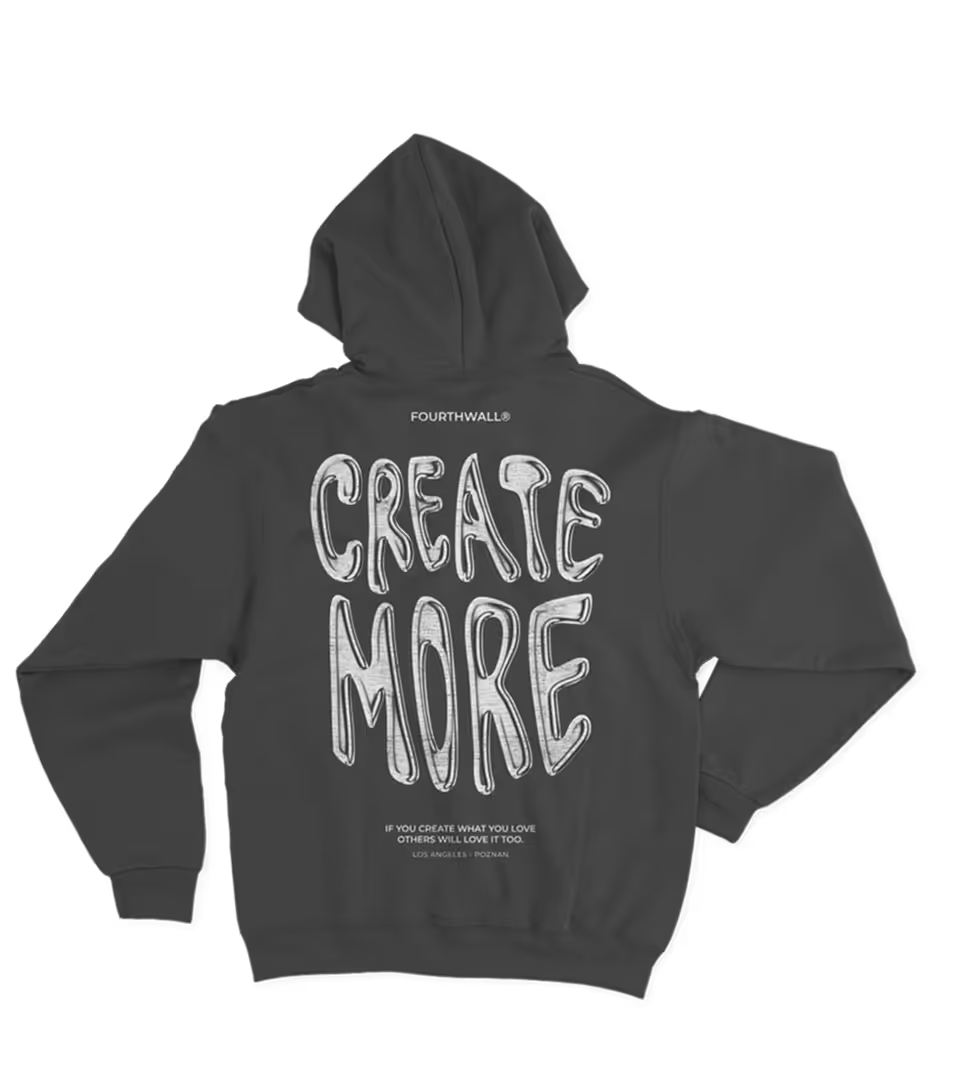
Design & sell custom products
Build your brand. On your terms
Browse our product catalog








Frequently asked questions
There are no monthly fees, no upfront costs, and no contracts to use Fourthwall. You set your prices and choose your own margins. Here is how our pricing and splits work when you sell:
- Products from our product catalog. All products in our product catalog have a publicly listed flat fee, which gets deducted from the selling price you set. There are no extra percentages/margins. You keep 100% of profits.
- Products you ship yourself. No fee (0% fee)
- Digital products. 5% flat fee (or 0% with Fourthwall Pro)
- Subscription memberships. 5% flat fee
Additionally, all US-based credit card transactions have an added 2.9% + $0.30 payment processing fee (same as Shopify). Fees vary for PayPal and other providers. Learn more.
Product costs are listed directly in our product catalog.
If a t-shirt is listed in our catalog at a $10 cost, we will automatically deduct that amount from your profits whenever you make a sale. You can sell products for any price you want.
For example, if you sell the shirt for $22, you'll make $12 in profit on each unit sold. If you sell it for $50, then you'll make $40 in profit on each unit sold.
Yes! Fourthwall works with manufacturing & fulfillment partners around the globe in the US, UK, EU, Canada, Mexico, Australia, and Japan.
Shipping rates are dynamically determined by the size of package and destination. We work with most major carriers and pass through the true cost of shipping. That means that you can offer low-cost, fast shipping to your fans. Most items have a delivery window of 5-8 days.
Be sure to browse our product catalog to find products that are fulfilled out of your target regions to provide the fastest & cheapest shipping for your community.
Yes! Fourthwall operates as the "Merchant of Record" and automatically supports the following payment methods on checkout:
- All major credit cards
- PayPal
- Apple Pay & Google Pay
- Amazon Pay
- And many local payment methods. Click here to see the full list
Fourthwall operates as the "Merchant of Record", which means that we're responsible for handling all sales taxes. This includes nexus registration, collecting sales tax, and remitting this to US states & other countries.
That way you can focus on designing products and promoting your shop, not taxes.
Yes. You can connect a custom domain or subdomain on Fourthwall. Learn More.
Fourthwall Pro subscribers receive a free custom domain upon upgrading.
If you need help finding an artist or designer, check out our design community.
This is a vetted network of exceptional designers that can help you make great quality designs for your audience. We also recommend tools like Canva or Kittl.
Yes. For any product from our product catalog, we'll handle all customer support for you.
From answering general order questions to making address changes, our team is there to ensure that your buyers are treated with the same level of care that you would personally give them. We have a 12-hour or less average reply time, including nights and weekends.
For any items that you source on your own and ship from home, however, you'll need to do customer support.
Yes! Over 200,000 sellers use Fourthwall to power their storefronts. This includes creators, podcasters, artists, musicians, startups, non-profits, and more.
Get inspired and browse all examples sites.
Fourthwall supports many free integrations, including:
- YouTube Product Shelf (Merch Shelf)
- TikTok Shop
- Facebook and Instagram Shopping
- Twitch Product Gifting
- StreamElements and Streamlabs stream alerts
- Zapier
- Klaviyo
- Mailchimp
- And many, many more
There are no requirements to join Fourthwall! Sign up now.